Planning Your Trip: Days, Distance & Packing
How many days you need, how far to paddle each day, what to wear, and how to pack light for the portages.
On this page
The circuit is 116 km and it does not care about your schedule. Nearly every trip that goes badly went badly because the plan had no slack in it — so work out your days before you book, and then leave room for the weather to disagree.
How many days
Six or seven days with good weather is the honest recommendation. Eight lets you slow down, swim, fish and sit out a bad afternoon without losing the trip. Most parties take somewhere in that range.
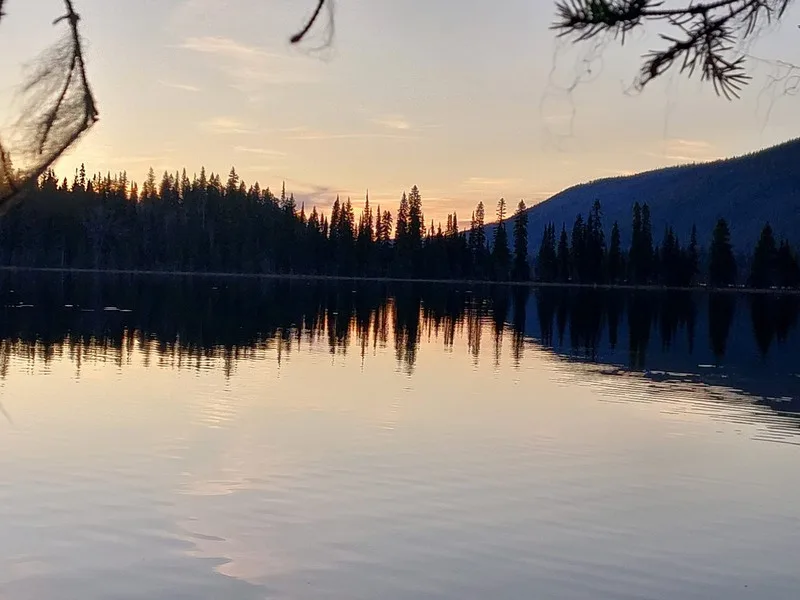
It can be done faster. We have done it in three, in perfect conditions, and it was an enormous amount of paddling and not much else. If your reason for coming is the place rather than the distance, do not plan a fast trip — you will spend it looking at the bow.
How fast you actually travel
A loaded canoe moves at about 4–5 km/h on flat water. That is roughly walking pace, and it assumes calm conditions, which you will not always get.
Twenty kilometres in a day is comfortably achievable with some paddling experience. It is a lot less achievable into a headwind on a big lake, and it leaves little time for anything but paddling. Work out your days at 15 km if you want the trip to be enjoyable, and treat 20 as your good-weather ceiling.
Use those numbers with the lake-by-lake guide to sketch which campsites you might aim for each night. You are not committed to it — sites are first-come and you will change the plan — but arriving with no idea where the next site is makes for anxious afternoons.
Plan the trip you want, then add a day. Wind on Isaac Lake can stop you outright, and a party with a spare day waits it out comfortably while a party without one paddles in conditions it should not.
Campsites are first-come, and shared
You are not the only party out there. Sites fill on a first-come, first-served basis, and most have several tent pads — so if pads are free after your group is set up, expect others to join you, and be gracious about it. Late in the day, a full site will still make room for a party that has nowhere else to reach before dark.
That works in both directions. Some evening you will be the party arriving late, and you will be very glad the people already there shuffled up.
What to wear
- In the canoe: Crocs or waterproof sandals. Not flip-flops — they get stuck in the mud at every landing.
- On the portages: trail runners. Unless you have unstable ankles, boots are more than the trails need.
- Rain gear. The weather changes fast here and you will be glad you packed it.
- Wool and polyester layers, not cotton. They dry quickly and stay warm when wet; cotton leaves you damp and cold.
- A down or fleece jacket for the evenings, plus a hat and gloves if you feel the cold. Summer nights here still get chilly.
- A bathing suit. Several of the lakes have superb sandy beaches.
Expect to swap footwear at every portage — there is usually room to pull the canoe out and change, and sometimes even a bench. Try not to leave your boat where it blocks the landing for the next party.
Pack light — this is the one that catches people
Canoe trips usually forgive overpacking. This one does not. Every extra kilo sits your canoe lower and slows it, and then you carry it on your back across the portages.
Remember the limit: 28 kg (60 lb) of gear in the canoe while it is on a cart, weighed at orientation. Whatever exceeds that goes on your back, so the question is not “can I fit this in the boat” but “do I want to carry this for two and a half kilometres”.
The single most common thing people tell us at the end of a trip is that they brought too much.
What else to bring
- Water bottles and a way to treat water — a filter, or tablets. There is no potable water on the circuit.
- A pack each, big enough to carry the gear that will not ride in the canoe.
- A proper sleeping bag. The nights are cool even in July.
- Several small tents rather than one big one — tent pads are on the small side, and a large tent may not fit.
- Dry bags and compression sacks. Everything that matters goes in one.
- Binoculars or a camera. The wildlife on the Bowron River stretch alone justifies them.
- A fishing rod, if that appeals — see beyond the circuit for what is in the water and when.
Stocking up on the way
There is nowhere to shop in the park. Quesnel is the last real town, with several grocery stores and a small outdoor shop — do your proper shop there. Wells has a small grocery for basics, and there is a very small store about a kilometre from the Registration Centre for the thing you forgot.
The Registration Centre itself sells T-shirts, sweatshirts and hats, but no supplies. See getting here for where these sit on the drive.
Book early
Reservations for the following season open in early winter and the window is shorter than people expect — particularly for groups. July and August dates go first. BC Parks publishes the dates and the fees each year; get your circuit reservation confirmed, then talk to us about a canoe.
Canoes waiting at the start and the finish.
Book a CanoeLive availability on FareHarbor · no shuttling required